Trip notes by Shrapnel Base, 2–5 October 2026
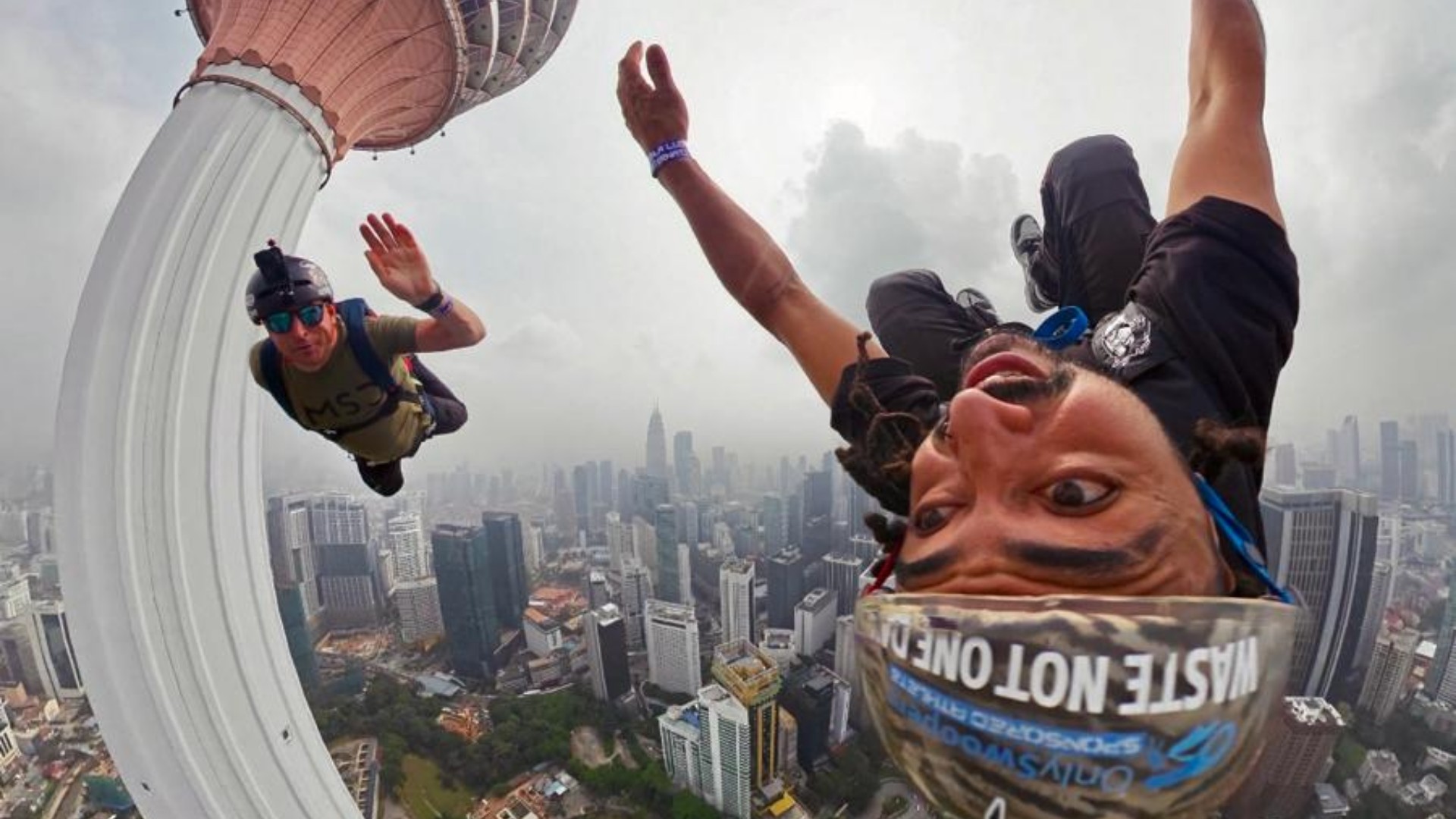
BASE Malaya Club runs organised BASE events across Malaysia for jumpers from around the world. Working with venue partners, the club gets jumpers access to some of the country's most prominent buildings and towers, including KL Tower, Tamu Suites and K188.
Their events are well organised and offer some of the best urban BASE jumping I've done, with great venues and an international crowd of jumpers.
Night jumps from KL Tower were a highlight for me. With the Petronas Twin Towers to my left, Merdeka 118 to my right and Kuala Lumpur lit up below, the view from the exit platform was exceptional. Jumping into that skyline is something I won't forget.
At a glance
- Location: Kuala Lumpur, KL Tower (approximately 984 ft)
- Organisers: Capt No Reason and Idros
- Instagram: b.a.s.e_malaya_club on Instagram
- Duration: 3 days
- Entry fee: 500 USD. Includes lunches, merchandise, motorbike shuttles, the final ceremony dinner, photos and access.
- Who it's for: Experienced BASE jumpers. The official requirement is 200+ jumps, but the organisers made plenty of exceptions. In my view, current jumpers with 100+ jumps can be suitable (see below).
The setting
Arriving at KL Tower for the first time was exciting. Seeing it up close brought home the scale of the object I was about to jump. Before I'd even reached the exit platform, it already felt like something special to be part of.
The people added to that. Some of the sport's most recognisable jumpers were there alongside people who had dreamed of making this jump for years. Sharing the event with them, each with their own reasons for being there, was a big part of what made it memorable.
Up on the exit platform, the views put you in the middle of Kuala Lumpur's skyline, with the Petronas Twin Towers and Merdeka 118 above the city. With cameras, tourists and spectators watching, it felt like being on the big stage. There was plenty to take in, but once it was my turn, the focus came back to the jump.
The battle rhythm of the day
During my visit, jumping started around 08:30, with calm, wind-free mornings. Short showers tended to arrive around 14:00 but usually passed quickly. Once things had dried out, jumping carried on into the early evening, typically finishing around 18:00.
The short queues and professionally run exit point made it easy to set your own pace. Some jumpers did 15 or more jumps a day, and others managed 22–23. There were plenty of chances to jump without needing to rush.
For me, the appeal was being able to enjoy the event at my own pace. My advice is to make the most of it without getting caught up in chasing numbers. Take breaks when you need them and give each jump the attention it deserves.
Wind direction and strength can change throughout the day. The large running platform and the landing areas don't guarantee suitable conditions, so follow the organisers' flag system and exit guidance. With short queues and so much going on around you, it's easy to get carried away. Be honest about your limits and be comfortable sitting a jump out.
The landing areas
There were two main landing areas at KL Tower: the flag strip beneath the tower and the larger grass area by the water tank. The flag strip was the more demanding of the two, suited to experienced jumpers with accurate canopy control. The grass area gave more room, although it still needed a planned approach and attention to the conditions.
Get familiar with both areas during the event briefing and choose according to your ability and the conditions on each jump. Having options is useful, but knowing which one suits you matters more than getting back to the exit quickly.
I liked the motorbike shuttle from the grass area. It got jumpers back to the tower quickly and took away some of the temptation to pick the more technical landing just to save time. Choosing the area with more room didn't mean a slower turnaround.
Experience and entry requirements
For the event I attended, the official entry requirement was 200+ BASE jumps, although the organisers made plenty of exceptions.
Personally, I think there's a case for considering current, competent jumpers with 100+ jumps, given the exit platform and the larger landing area by the water tank. I would assess each jumper individually, looking at their recent jumps, canopy control and landing accuracy. At that lower level, I'd also keep them to solo jumps and make sure a mentor is available for questions and advice.
That's my personal view. Acceptance is the organisers' decision. If you're below the advertised threshold, speak to them before booking travel or accommodation. Be honest about your experience and currency. A reference from an experienced instructor or jumper may help them assess your application.
Skills and preparation
In my view, this event isn't suitable for jumpers with fewer than 100 BASE jumps, or anyone with gaps in their packing, canopy control or avoidance skills. Jump numbers alone don't tell the whole story. With crowds, cameras and other jumpers watching, you're on the big stage, and your fundamentals need to be solid.
Before going, have an honest conversation with your instructor about your readiness. Cover slider-up packing, canopy control, avoidance and accurate landings. If you're more experienced and considering two- or three-person multi-ways, discuss the extra preparation and experience those jumps need.
Sort out any weaknesses before travelling. Arriving current, prepared and comfortable with your limits gives you more room to enjoy the event, and the confidence to sit a jump out when something doesn't feel right.
Booking, documents and insurance
Get your place confirmed with the organisers before committing to non-refundable flights or accommodation. Check the registration paperwork early, including any evidence of experience or insurance you need to provide, so you have time to get everything together.
I'd strongly recommend sorting insurance before the trip. Make sure your policy explicitly covers BASE jumping at the event, including emergency medical treatment, hospital care and repatriation. An "extreme sports" label isn't enough on its own: get written confirmation and understand the exclusions, cover limits and excesses.
When comparing cover, I'd split it into three areas:
- BASE jumping travel medical cover. AURAS advertises travel insurance for BASE jumping. Confirm that the exact policy covers you, your part in the organised event and your travel dates in Malaysia.
- Income protection. Sports Financial Services and Cirencester Friendly are worth approaching about protecting your income if illness or injury stops you working. Confirm whether BASE-related injuries are covered. This is a different thing from insurance for overseas hospital bills.
- General travel cover. Check protection for other illnesses, accidents and travel problems, subject to the policy terms. Don't assume ordinary travel insurance will pay hospital bills from a BASE jump; check the activities covered and the exclusions. Your specialist policy may already include wider travel cover. Ordinary travel cover normally won't cover BASE jumping, but at the very least it will cover minor injuries, just keep the jumping quiet.
Where to stay
I stayed at Platinum Suites, booked through Booking.com, for approximately £200 for the week, with enough space for three of us. That worked out at roughly £29 a night for the apartment, or £9.50 each split three ways. For our group, it was an affordable option with the space we needed.
If staying close to KL Tower is your priority, these hotels are worth checking. The published prices give an idea of the budgets available:
- Oasia Suites Kuala Lumpur: very close to the tower, on Lorong P. Ramlee. Around £50–55 per room a night, based on reported weekday and weekend averages.
- Hotel Indigo Kuala Lumpur on the Park: on Jalan Punchak, in the immediate tower area. Trip.com lists an average-price guide of £157 a night; standard-room deals have also been advertised from about £93.
- Shangri-La Kuala Lumpur: nearby on Jalan Sultan Ismail. Around £110–117 per room a night, based on reported weekday and weekend averages.
- Courtyard by Marriott Kuala Lumpur City Centre: the former Pacific Regency, beside the tower area. Check opening status, availability and current rates: the property is being converted, so older Pacific Regency prices aren't a reliable guide.
These are indicative published figures, so check prices for your own dates, room type and number of guests. A room for three or a larger suite may cost more.
Compare a shared apartment with the nearby hotels before booking. Sharing kept our accommodation costs down, while staying right beside the tower is handier for the early starts.
Getting around
Transport from the airport and around Kuala Lumpur was easy and cheap. My main tip is to download and set up Grab before you arrive in Malaysia. It works much like Uber and makes arranging rides easy, so it's one less thing to sort out after landing.
We also used the city's electric scooters through the Beam app, which were very handy for getting around locally. Have both apps ready on your phone before the trip.
Clothing and equipment
I kept clothing simple for this trip. T-shirts, shorts, trousers and a few everyday essentials were enough. A washing machine at the accommodation makes things easier: you can pack less and wash clothes as you go.
Here's the jumping kit I used at KL Tower and what I liked about each item:
- TSG Superlight helmet: lightweight, with two sets of pads to help adjust the fit. TSG Superlight helmet on Amazon
- DJI Action camera: for capturing POV footage of my jumps, a great way to bring some of the trip home. DJI Action camera on Amazon
- Camera helmet mounts: I've found these reliable, with good contact over the curves of my helmet. Camera helmet mounts on Amazon
- Garmin fēnix 8 Pro: for maps and altitude information. Garmin fēnix 8 Pro on Amazon
- Richa D3O Diablo Level 2 knee protectors: my choice of lightweight knee protection. It feels like you're not wearing anything. I just had some Velcro added to secure them. Richa D3O Diablo knee protectors on Amazon
- AKU Spider boots: I liked their trainer-like feel combined with ankle support. AKU Spider boots on Amazon
- Magic Backpac custom container: lightweight DART version, with the customisation I wanted for my setup. DART BASE Container in the LMSD shop
- Gryphus 2 by EXILE: I liked its glide and canopy control for planned, accurate landings. Gryphus 2 in the LMSD shop
Affiliate disclosure: some links above are affiliate links. If you buy through them, I may earn a commission at no extra cost to you.
This was my setup for KL. Fit, familiarity and suitability for your own jumping should guide your choices.
Useful extras to pack
It's easy to focus on the jumping kit and forget the smaller things. Pack chargers, spare camera batteries and extra memory cards. There's plenty you'll want to film at KL. A lightweight waterproof jacket is also worth bringing, with the afternoon showers we had.
For anyone travelling from the UK: Malaysia uses the same Type G three-pin sockets, so you won't need an adaptor for anything with a standard UK plug.
First aid
Having doctors and ambulances on standby was reassuring. I'd still pack a small first aid kit with plasters, dressings and any personal medication, so you have the basics for minor cuts and scrapes.
Paracetamol or ibuprofen can be useful for minor aches and pains, provided they're suitable for you and taken as directed. If you're unsure, check with a pharmacist before travelling.
Sort out prescription medication well before you leave, particularly opioid painkillers or other controlled medicines. Check Malaysia's current requirements for your specific medication, keep it in its original labelled packaging, and carry an English-language prescription or doctor's letter alongside any required supporting documents. Some controlled medicines must also be declared on arrival, so don't assume a prescription covers everything.
I'd also include an elastic support bandage for minor sprains. If you pick up an injury, speak to the event's medical team and give yourself time to recover before jumping again.
Final thoughts
KL Tower was one of the most memorable urban BASE events I've done. The people made it as much as the tower did. BASE Malaya Club and their team deserve credit for the organisation, the professionally managed exit and thoughtful touches like the motorbike shuttle.
Arrive current, prepared and honest about your limits. Give yourself time to enjoy the event, follow the briefings and choose your own pace.
If you'd like more information about the trip, preparation or what to expect, get in touch with LMSD. We're happy to share what we know and help with any questions.
The next KL Tower BASE event has provisional dates in February 2027. These are still to be confirmed by the organisers, but I'm already looking forward to the chance of going back.